
Alvin Directory Collections and Shelves
Several repositories hold different slices of the historical record. The Texas State Library and Archives Commission lists Alvin directories for 1962 and 1963. The Galveston and Texas History Center lists an Alvin run from 1967 through 1991, but says that run is not inclusive. At the UT Center for American History catalog, Alvin has 23 associated results, including an R. L. Polk title and a Southwestern Bell title. A catalog result establishes that a collection exists. It does not prove each year is available or that every household was listed.
| Collections | Years | Where Held | Access |
|---|---|---|---|
| Alvin directories | 1962 and 1963 | Texas State Library and Archives Commission | Confirm onsite and reproduction rules |
| Alvin City Directories | 1967-1991, not inclusive | Galveston and Texas History Center Reading Room | In-person reading-room collection |
| R. L. Polk Alvin City Directory | Cataloged, individual years not exposed | UT Center for American History | Use the citation record or make a research request |
| Alvin and regional telephone books | Regional white pages, 1956-2005 on uneven dates | UT Center for American History | Listed telephone and address leads |
The gaps matter. The documented sources do not establish Alvin’s first directory year or the final local printed volume. Record the publisher, title, year, page, and repository with each result. A city directory citation should not turn a regional telephone book into a full local household list.
Alvin City Directory Publishers
The catalog separates the Polk city-book record from the Southwestern Bell telephone-book record. That distinction changes how a result should be read. A city book can offer a name, address, occupation or employer, and household notation when the volume includes them. A telephone book is a listing lead and may omit unlisted numbers or people served through a different exchange. UT also catalogs Houston Greater Residence White Pages that include Alvin and Brazoria County on uneven dates from 1956 to 2005, with 281, 713, and 832 area-code context.
Before copying an entry, inspect its title page and front matter. The Galveston collection does not state a publisher on its public holding notice, and the UT browse result does not expose a year-by-year Polk list. A citation should therefore say what the actual volume says, not what a nearby volume or a generic directory convention suggests.
The Galveston and Texas History Center genealogy resources identify the Reading Room as a place to consult the 1967-1991 Alvin run.
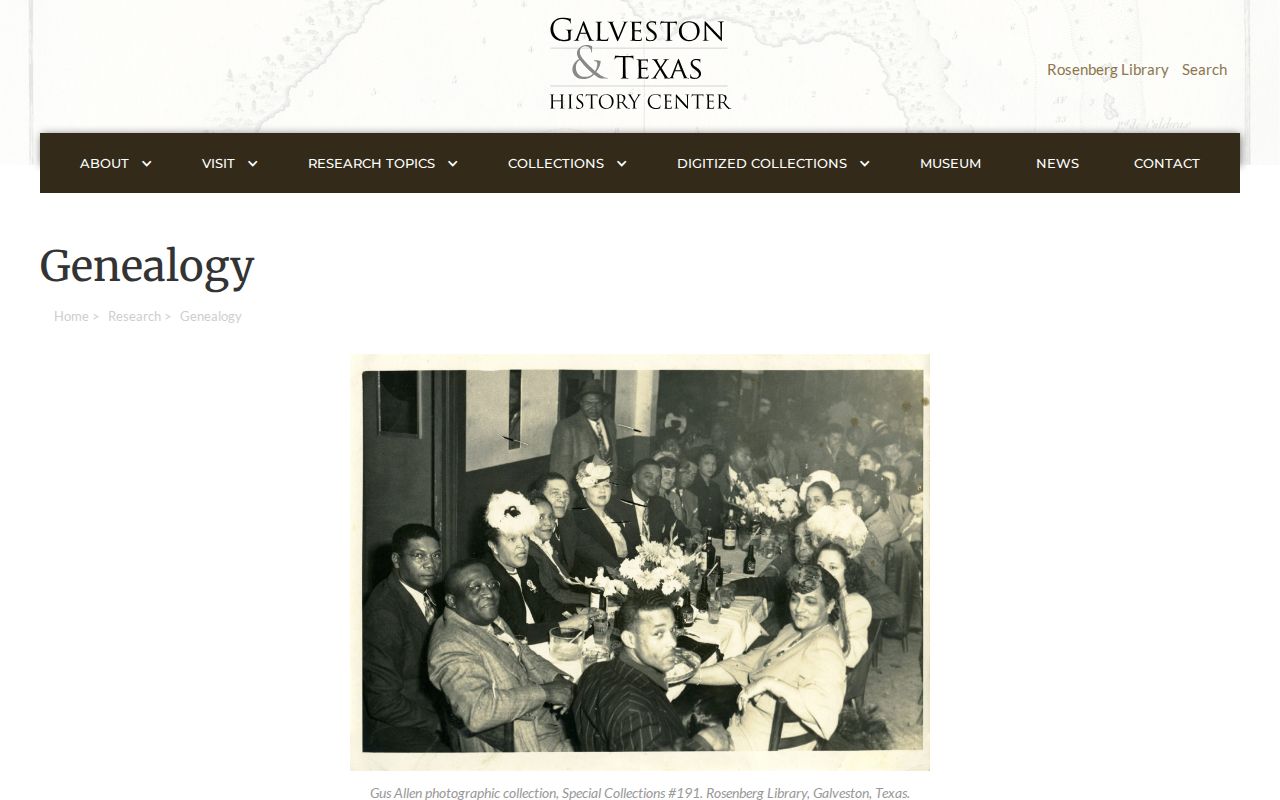
Use the holdings notice as a starting point, then request the particular volume needed. The noninclusive label means a missing year is possible even within the stated span.
Reading Alvin Directory Entries
An old entry can place a person in a printed source without proving a present-day address. The likely fields are the printed name, spouse or relationship notation, occupation or employer, street address, telephone number, and any owner, boarding, or widow notation used by that publisher. The web catalogs confirm the holdings, but no Alvin page image or abbreviation key was inspected during the research. Treat the list below as an entry-reading inventory, not as a reconstructed Alvin entry.
| Printed name | Capture initials, suffixes, and spelling exactly as the volume prints them. |
|---|---|
| Relationship notation | Record a spouse or other notation only when the volume itself supplies it. |
| Address and telephone | Keep the address as printed, then note whether the number is a listed telephone lead. |
| Work or business clue | Copy an occupation or employer only if it appears in that entry. |
| Volume citation | Save year, page, title, repository, and the abbreviation-key page. |
- Criss-cross directory
- A street and house-number arrangement that reverses the usual name-first order, often paired with telephone information.
- Householder index
- A name-oriented listing that may identify the principal listed person for an address, not every person in the home.
- Abbreviation key
- The volume’s own explanation of its marks, usually in preliminary pages. Read it before expanding a symbol.
A widow mark, owner mark, or boarding shorthand has no safe universal expansion. The key from a different Polk book can be wrong for the Alvin volume in hand.
Alvin Criss-Cross Directory Route
When an old address is the starting point, ask the repository whether the relevant volume has a street-order or criss-cross section. The Library of Congress directory guide describes criss-cross directories as arranged by street and house number, commonly with telephone information, and notes that many items require an in-person request. Read the street heading and number in sequence, then preserve the printed form rather than silently converting it to a current street label.
Street names can change and a directory may have used a nickname, a prefix, or a pre-annexation label. Alvin’s later growth also makes a neighborhood name, a current road name, and the printed address useful cross-checks. For a full present-day address chain, use the separate Alvin street directory route only after keeping the historical listing date distinct from current parcel information.
Note: A criss-cross result is a dated listing, not proof that every nearby home had the same listed household.
Trace an Alvin Directory Household
A household trace works best as a dated sequence. Start at the earliest available volume after the address or name is known. Move through later available volumes, comparing initials, spouse notation, telephone changes, occupation changes, and address moves. Then pair the printed years with released federal census material, a deed or parcel record, and an obituary or probate source. Directories can be annual, but the researched Alvin runs have known gaps and federal census schedules are decennial.
- Find the earliest available Alvin listing and copy its page citation and printed address.
- Check later available volumes for the same street number, name variants, and relationship changes.
- Use a criss-cross section, when present, to test the street-order listing for that publication year.
- Compare the date with released census material, then use the County Clerk or appraisal trail for a dated property record.
- Use an obituary, cemetery record, or probate file to test a disappearance from later books.
Disappearance has several possible causes: a move, death, an unlisted telephone number, a changed spelling, or simply a missing volume. It is not enough by itself to establish what happened to a person.
Alvin Directory Newspaper Context
The Alvin Sun on the Portal to Texas History has a title run described as 1890-current, with digitized holdings from 1896 through 2019 and gaps. It can add obituaries, civic notices, business advertising, and spelling variants to a directory citation. Search a name with a date range rather than expecting every issue or every notice to be online. A notice can supply context, but it does not replace the dated book entry.
The digitized Alvin Sun title page provides the year and issue path for historical notice research.
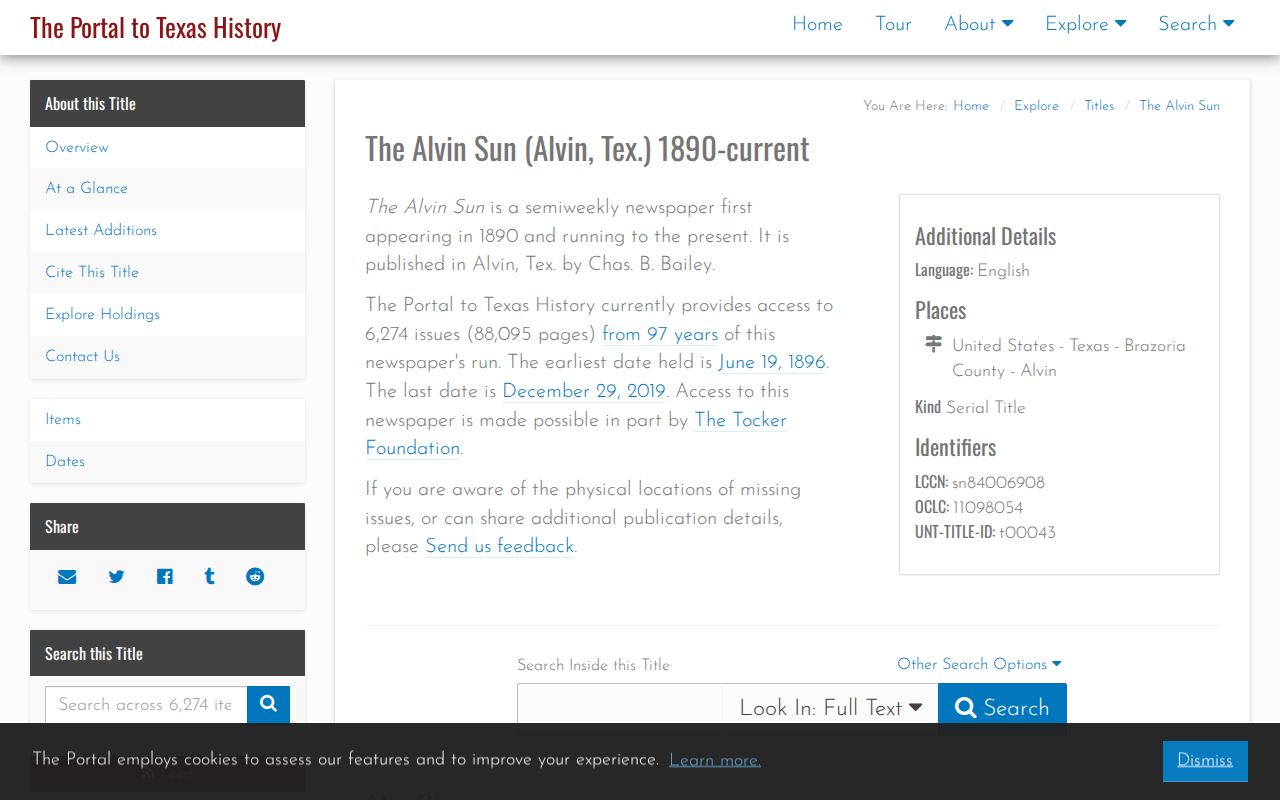
A newspaper search is especially useful for trying former names, initials, and the produce, railroad, rice, or oil vocabulary found in different Alvin eras. It still needs a source date beside the result.
The Brazoria County Library System genealogy service adds library-only Ancestry Plus, Fold3 Library Edition, FamilySearch, HeritageQuest, Explore Texas articles, and historical maps. The library can help connect a directory address to a census or map, while its access rules may differ by database.
Alvin Directory Research Timeline
The reliable chronology is about documented holdings, not a claim of continuous publication. Alvin incorporated in 1893, and its growth around the Santa Fe Railroad, farming, produce, rice, and later oil can help interpret occupation terms in a historical entry. The City of Alvin history supplies that local context. It does not establish a directory publication date.
| 1893 | Alvin incorporated; this is local-history context, not a documented first directory year. |
|---|---|
| 1962-1963 | Texas State Library lists Alvin directory holdings. |
| 1967-1991 | Galveston and Texas History Center lists a noninclusive Alvin run. |
| 1956-2005 | UT catalogs uneven regional white-page dates that include Alvin and Brazoria County. |
| 1890-current title | The Alvin Sun title offers uneven issue holdings for related notices. |
For older household evidence, the state archive’s Brazoria inventory includes deed, tax, marriage, probate, and court material from the nineteenth century. Those books may be on microfilm or in an archive rather than online, and certification remains with the original custodian.
Alvin Directory Repository Access
The UT catalog is the place to confirm an exact citation for the Polk and Southwestern Bell titles before requesting a volume. The Galveston Reading Room is the strongest published lead for the later noninclusive run. The Texas State Library is the documented home for the two early volumes. For local-history questions, the Brazoria County Historical Museum offers its Adriance Library and Research Center; its Old 300 database is offline because of privacy concerns, so targeted help is the appropriate route.
UT’s Alvin directory catalog is useful before a request because it distinguishes local directory titles from broader Houston-area books.
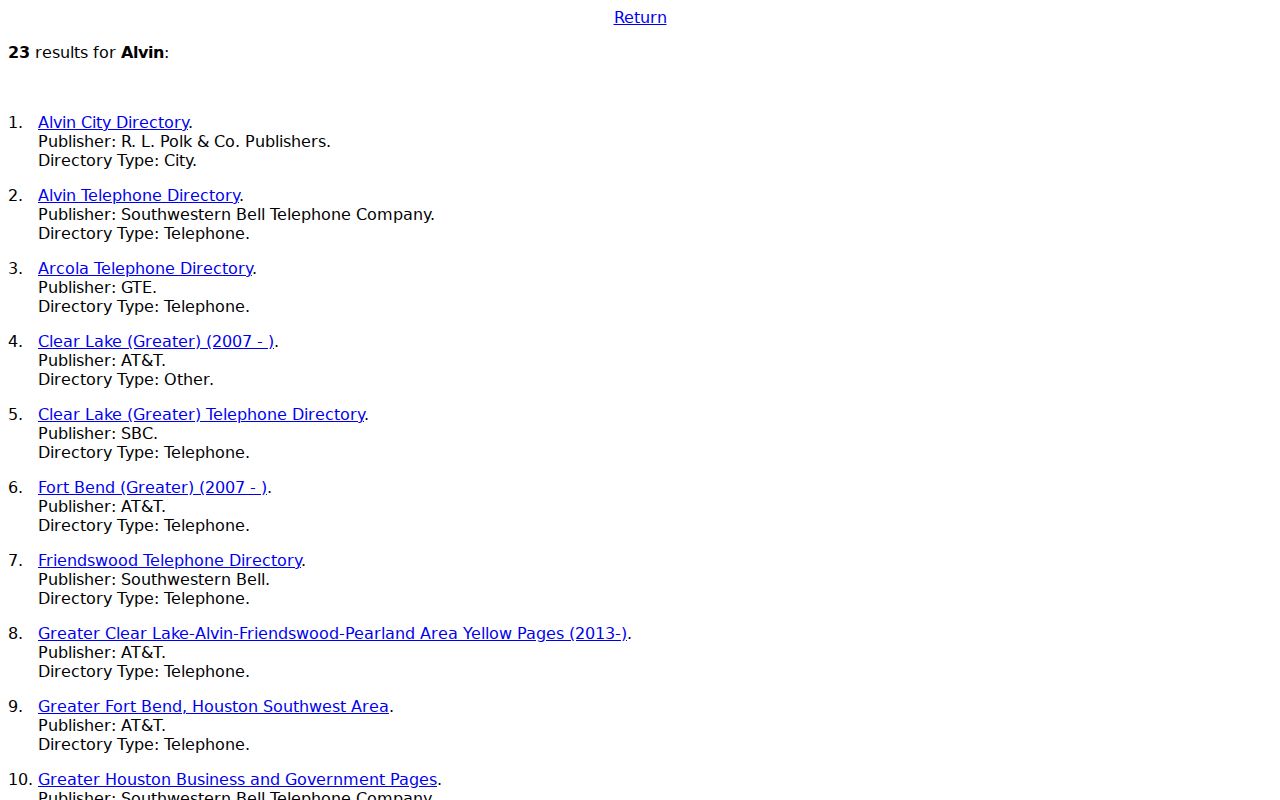
The catalog image supports a request for a particular title or year. It is not a page image of a named Alvin household, so the book itself remains the source for entry-level claims.
Limits of Alvin City Directories
Printed directories show a publication snapshot, not a complete record of every person at an address. A telephone book can omit unlisted households. A regional book can cover Alvin without reaching every rural or exchange-area address. A city-book occupation entry can reflect the compiler’s categories and the time of publication. Keep historic occupants, assessed owners, registered voters, and mapped parcels as separate record layers.
Names also need careful matching. Test initials, spouse names, former surnames, Hispanic surname order, and street-prefix or suffix variants. An apparent match should be checked against an independent identifier such as a dated legal description, a census relationship, a probate file, or a cemetery record. Do not turn a historical listing into a current-home conclusion.